
Signal accuracy is often presented as one percentage, but the number can be misleading when the underlying rules are unclear. A fair evaluation requires complete closed-trade data, consistent definitions and enough observations to distinguish skill from short-term luck.
Define what counts as a win
Some services count a signal as successful when TP1 is touched. Others require TP2, the final target or a weighted partial exit. These methods produce different accuracy figures.
Before accepting a percentage, ask:
- Which target defines success?
- Are partial profits counted?
- Are stop-losses included?
- How are cancelled or expired signals handled?
- Are open trades excluded until closure?
Use closed trades only
An open trade has no final outcome. Counting temporarily profitable open positions as wins inflates results. A transparent report separates pending, active and closed signals.
Include every stop-loss
Accuracy should not hide losses. If six signals reach the defined success target and four hit the stop, the simple win rate is:
6 ÷ (6 + 4) = 60%
That calculation is meaningful only when all ten trades use the same result rule.
Accuracy is not the same as profitability
A strategy can win frequently and still lose money if losses are much larger than wins. Another strategy can win less often and remain profitable when average wins are larger.
Evaluate:
- average win;
- average loss;
- reward-to-risk ratio;
- fees and slippage;
- maximum drawdown;
- consecutive losses.
Review sample size
Five successful trades do not prove long-term reliability. Results should cover different market conditions and a meaningful number of completed signals.
A provider should avoid using a very short winning period to imply permanent performance.
Check timestamps and publication integrity
A verifiable signal should be published before the market move. Look for server timestamps, delivery times and an unchanged entry, stop and target record.
Be cautious when results are shown only as cropped screenshots. Screenshots can omit losses, hide timestamps or be edited.
Separate theoretical results from executable results
A chart may touch a target briefly, but real traders can experience spread, slippage and delayed delivery. Strong reporting explains whether a wick counts, which price source is used and how outcomes are marked.
Understand multi-target reporting
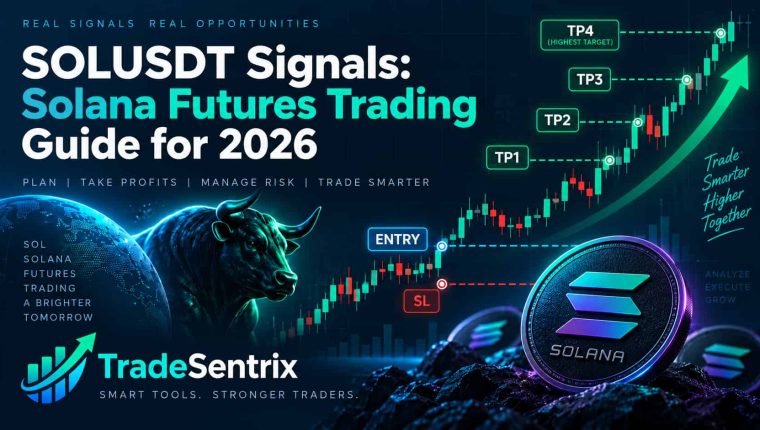
When a signal has TP1–TP4, performance can be reported in several ways:
- percentage reaching each target;
- percentage reaching at least TP1;
- weighted return based on partial exits;
- final outcome based on a fixed target rule.
The method should remain consistent across all signals.
Measure drawdown and losing streaks
Drawdown shows how much performance declined from a previous peak. Consecutive losses show whether a trader can emotionally and financially tolerate the strategy.
A 70% win-rate strategy can still produce several losses in a row. Position size must be designed for that possibility.
Evaluate delivery quality
A technically good signal may be difficult to use if it arrives late. Compare the publication time with website, Telegram or push-delivery time. Check whether the entry remains available when the alert reaches the user.
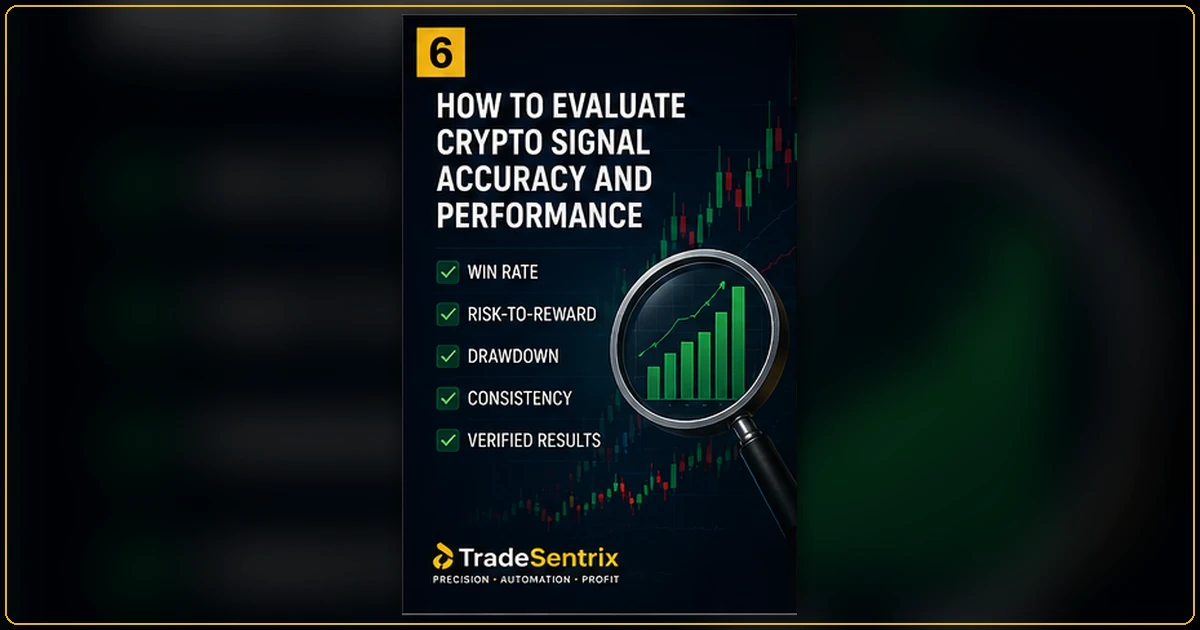
Use a consistent evaluation checklist
- Confirm the success definition.
- Count all closed wins and losses.
- Exclude open trades from final statistics.
- Review average win and average loss.
- Check the maximum drawdown.
- Verify timestamps and unchanged trade parameters.
- Assess delivery delay and executable entry quality.
- Review enough trades across multiple conditions.
TradeSentrix provides a public results page where users can review closed trades rather than relying only on promotional screenshots.
Questions to ask a signal provider
- Do you publish losing trades?
- Which target determines the headline accuracy?
- Can users view entry, stop and target history?
- Are timestamps generated by the platform?
- How are wicks and candle closes treated?
- Can historical records be reviewed without joining a private group?
Keep a reproducible performance journal
A performance report is more credible when another person can reproduce the calculation from the underlying trades. Export or record the signal ID, symbol, direction, entry, stop, targets, publication time, close time and final status. Keep the formula used for accuracy unchanged from one report to the next.
When a methodology changes—for example, moving from TP1-based success to TP2-based success—start a new reporting period or show both methods separately. Mixing rules across one headline percentage makes comparison unreliable.
Frequently asked questions
Is 90% accuracy realistic?
It may occur in a short sample, but it should not be assumed to continue. Verify the definition, sample size, losses and reward-to-risk.
Should TP1 always count as a full win?
Only if the published methodology defines TP1 as the success criterion. Otherwise the report may overstate the result.
What is more important than win rate?
Expectancy, drawdown, execution quality and consistent risk often matter more than the headline percentage.
How often should performance be reviewed?
Review continuously, but make strategy-level conclusions from a sufficiently large sample rather than a few recent trades.
Review transparent outcomes on the TradeSentrix Results page.
Risk notice: Crypto assets and leveraged futures are volatile. This article is educational and does not provide financial advice, a guarantee of profit, or a recommendation to open a position. Always verify signal details, use risk controls, and trade only with funds you can afford to lose.