

Crypto trading signals are structured trade ideas that describe a possible market setup. A useful signal does more than say “buy Bitcoin” or “sell Ethereum.” It should define the market, direction, entry area, protective stop, profit targets, timeframe and publication time so the trader can decide whether the setup is still valid.
Signals can help traders organize market information, but they do not remove uncertainty. A signal is a plan built from analysis, not a promise about what price will do next. The trader remains responsible for position size, leverage, timing and account risk.
What information should a crypto trading signal include?
A professional signal normally contains the following elements:
- Symbol: the market being traded, such as BTCUSDT or ETHUSDT.
- Direction: BUY or LONG when the setup expects upward movement, and SELL or SHORT when it expects downward movement.
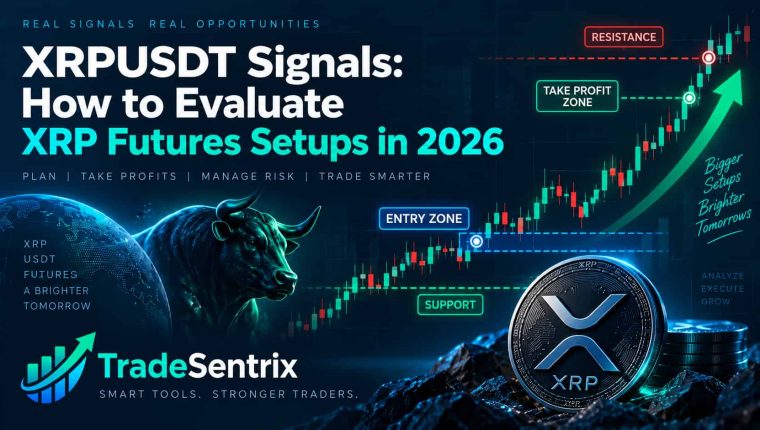
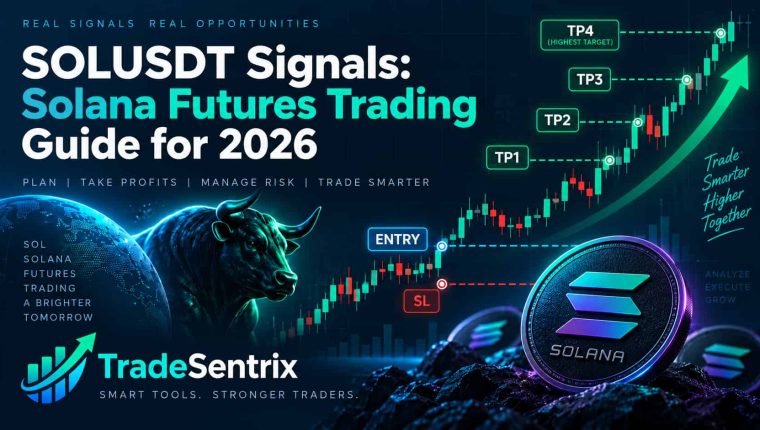
- Entry: the price or price zone where the setup becomes actionable.
- Stop-loss: the predefined invalidation level used to control loss.
- Take-profit levels: one or more planned exit points, often shown as TP1, TP2, TP3 and TP4.
- Timeframe: the chart interval used for the analysis, such as 5 minutes, 15 minutes or 1 hour.
- Timestamp: the exact time the signal was published.
- Status: whether the signal is pending, active, closed, stopped or completed.
These fields make a signal measurable. A vague message cannot be audited properly because the reader cannot determine where the trade began, where it failed or how success was defined.
How are crypto signals generated?
Signals may be created by a human analyst, a rule-based strategy, an algorithm or a combination of methods. Common inputs include trend direction, support and resistance, momentum, volatility, volume, market structure and multi-timeframe confirmation.
For example, a BTCUSDT setup might require price to hold above a defined support area, momentum to recover and the higher timeframe to remain constructive. A SELL setup may require a confirmed breakdown, a failed retest and enough distance to the next support level to justify the risk.
No single indicator should be treated as certainty. Stronger systems combine evidence and wait for confirmation rather than reacting to every candle.
Entry price versus entry zone
Some signals use one exact entry price, while others use a zone. A zone reflects the fact that markets move quickly and may not fill every trader at precisely the same price.
The important question is whether the current price still offers a sensible risk-to-reward profile. Chasing a BUY far above the published entry can increase loss distance and reduce remaining upside. Chasing a SELL far below the entry can create the same problem in reverse.
Read our detailed guide on how to read entry, stop-loss and take-profit levels before acting on any alert.
Why a stop-loss is essential
A stop-loss defines where the original analysis is no longer acceptable. It prevents a normal losing setup from becoming an uncontrolled account-level loss.
Stops can be hit by volatility, sharp wicks or a genuine trend reversal. That does not automatically mean the signal was fraudulent. Every strategy has losing trades. The real evaluation is whether stop placement, position sizing and long-term performance are managed consistently.
How take-profit levels work
Multiple targets allow traders to reduce exposure gradually. A common approach is to secure part of the position at TP1, move protection closer to entry when appropriate, and leave the remaining portion for higher targets.
There is no universal exit method. Some traders close at TP1 for lower exposure, while others use TP2 or later targets. The chosen plan should be decided before the trade becomes emotional.
How to check whether a signal is still valid
- Check the timestamp. Fast markets can move significantly within minutes.
- Compare current price with the entry. Avoid entering after most of the expected move has already occurred.
- Check whether the stop or a target was already touched. A completed or invalidated signal should not be treated as new.
- Confirm the correct symbol. BTCUSDT spot, BTCUSDT perpetual and other contracts are not always identical.
- Review market conditions. Major news or abnormal volatility can change execution quality.
TradeSentrix presents structured signal details and public trade outcomes so users can verify information on the platform rather than relying only on screenshots or forwarded messages. Explore the crypto signals page and the public results history.
How much risk should be used?
Risk should be based on the amount that can be lost if the stop is reached—not on the position’s headline value after leverage. Traders commonly define a small percentage or fixed amount of account risk per setup and calculate position size from the stop distance.
Leverage increases market exposure and can accelerate losses. It should never be used to compensate for weak analysis or to recover quickly from a previous loss.
How to evaluate a signal provider
Look for transparent timestamps, complete trade parameters, visible losing trades, consistent outcome rules and realistic language. Avoid services that advertise guaranteed income, hide stop-loss results or publish only winning screenshots.
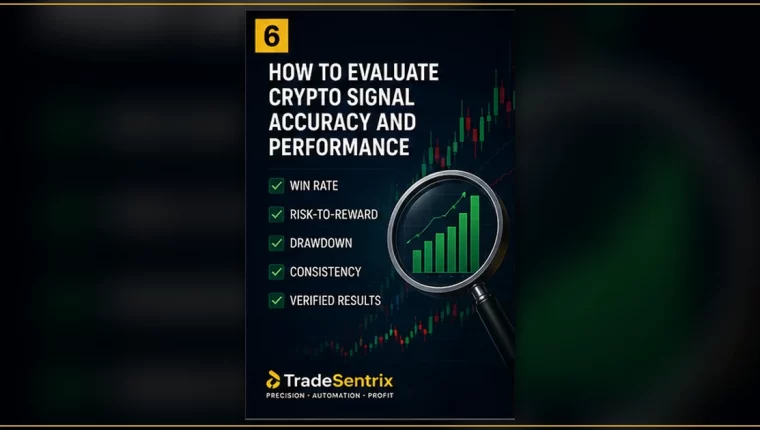
A fair evaluation should cover a meaningful sample of closed signals. Learn more in our guide to evaluating crypto signal accuracy and performance.
Free signals and paid signals
Free signals can be useful for testing format, delivery and transparency. Paid services may offer a larger quota, additional delivery channels, automation access or more detailed tools. Price alone does not prove quality. Compare the exact service, historical reporting and risk disclosures.
TradeSentrix provides a dedicated free crypto signals page for users who want to understand the platform before selecting a paid package.
Frequently asked questions
Are crypto trading signals guaranteed to make money?
No. Every signal can fail because markets are uncertain. A responsible provider describes a setup and its risk rather than guaranteeing a result.
Can beginners use trading signals?
Beginners can use signals as an educational framework, but they should first understand order types, leverage, stop-losses and position sizing. Starting with simulation or very small risk is safer than copying trades blindly.
Should I enter after TP1 has already been reached?
Usually the original risk-to-reward profile has changed. Re-enter only if a fresh setup is published or your own analysis supports a new trade plan.
How many signals should a service send?
There is no ideal number. High frequency is not automatically better. Quality, clarity, execution practicality and consistent reporting matter more than quantity.
Review structured crypto setups: Visit TradeSentrix Crypto Signals or create an account through the registration page.
Risk notice: Crypto assets and leveraged futures are volatile. This article is educational and does not provide financial advice, a guarantee of profit, or a recommendation to open a position. Always verify signal details, use risk controls, and trade only with funds you can afford to lose.