
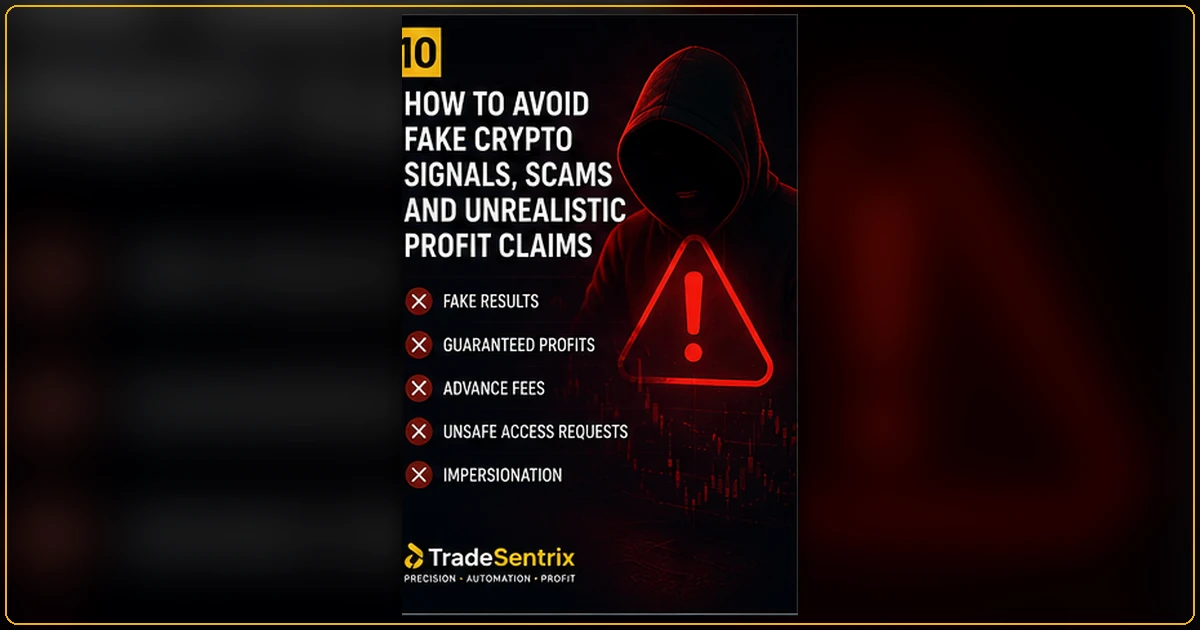
Crypto signal scams often combine urgency, social proof and unrealistic profit claims. A polished website, active Telegram group or professional-looking dashboard does not prove that a service is legitimate. Verification should focus on records, identity, permissions and the movement of funds.
Warning sign: guaranteed returns
No signal provider can guarantee profit in a volatile market. Claims such as “100% accurate,” “risk-free income” or “double your account this week” are major red flags.
Investor.gov lists guaranteed returns and offers that appear too good to be true among common indicators of investment fraud. See the official investment-fraud red flags checklist.
Warning sign: edited or selective screenshots
Scammers can show only winning trades, remove timestamps or alter balances. Some fake platforms display fabricated account growth while preventing withdrawal.
Investor.gov notes that scammers may use fake screenshots or manipulated account information to make returns look legitimate. Review its guidance on relationship investment scams.
Warning sign: pressure to send funds directly
A signal provider should not require users to send trading capital to a personal wallet. Be especially cautious when someone claims they will trade on your behalf, unlock a profit or recover a lost account after payment.
Warning sign: withdrawal fees and taxes paid in advance
Fraudsters may display a fake profit and then demand an additional payment for tax, verification or account release. Sending more money usually creates another demand.
Investor.gov warns about advance-fee tactics in crypto scams, including bogus payments required before funds can supposedly be withdrawn.
Warning sign: requests for sensitive credentials
Never share:
- wallet seed phrases;
- exchange passwords;
- two-factor authentication codes;
- email verification codes;
- remote-desktop access;
- API keys with withdrawal permission.
Legitimate support can troubleshoot an account without requesting secrets that control funds.
Warning sign: impersonation
Scammers copy brand logos, administrator names and channel descriptions. They may use a username that differs by one character.
Open support and payment links only through the official domain. Do not trust a direct message simply because the sender knows details from a public group.
Verify performance independently
Look for a public history containing both wins and losses, original timestamps, entry, stop, targets and clear outcome rules. Avoid services that delete losing calls or constantly change targets after publication.
TradeSentrix users can inspect the public trade results page and read how signal accuracy should be evaluated.
Verify the official communication channel
Use channel links from the provider’s official website. Check spelling, account age, pinned security notices and whether support initiates private conversations.
Our guide to Telegram crypto signal alerts explains additional checks.
Protect exchange API access
When a bot connection is offered, use restricted trading permissions, IP allowlisting and no withdrawal access. Revoke the key immediately if credentials may have been exposed.
Use a safe verification checklist
- Confirm the exact official domain.
- Verify channel links from that domain.
- Search for transparent closed-trade records.
- Reject guaranteed-return claims.
- Never transfer funds to an administrator’s wallet.
- Never share passwords, seed phrases or 2FA codes.
- Use restricted API permissions.
- Test with a demo or small risk first.
- Stop when pressured to act immediately.
- Report impersonation and fraudulent payment requests.
What to do after a suspected scam
Stop sending money, preserve screenshots and transaction records, revoke API keys, change passwords and contact the exchange through its official support channel. Report the account to the communication platform and relevant local authorities.
Do not pay a “recovery expert” who contacts you unexpectedly. Recovery scams frequently target people who have already lost funds.
Check the domain and payment destination
Scammers often register look-alike domains or send payment instructions through direct messages. Type the official website address yourself, check the browser certificate and compare the destination with information shown inside the authenticated account. A legitimate brand should not suddenly change a payment wallet through an unofficial chat.
Frequently asked questions
Does a large Telegram group prove legitimacy?
No. Members, testimonials and engagement can be fake or purchased.
Can a verified-looking profile still be fake?
Yes. Always confirm links and usernames through the official website.
Should a signal service ask for my seed phrase?
Never. Anyone with the seed phrase can control the wallet.
Are all paid signal services scams?
No. Payment alone does not determine legitimacy. Evaluate transparency, records, security and realistic risk disclosures.
Verify official TradeSentrix information through tradesentrix.com and review transparent outcomes on Public Results.
Risk notice: Crypto assets and leveraged futures are volatile. This article is educational and does not provide financial advice, a guarantee of profit, or a recommendation to open a position. Always verify signal details, use risk controls, and trade only with funds you can afford to lose.